
Why Do I Feel Like I’m Not Good Enough?
Have you ever found yourself looking around and wondering how everyone else seems to be getting life right while you’re constantly questioning yourself?
Maybe you look at someone else’s relationship and wish yours felt that secure. Maybe your friends seem to be earning more money, buying houses, progressing in their careers or simply looking like they’ve got everything under control. Or perhaps it’s the people who just seem so comfortable in themselves that catch your attention. They don’t appear to overthink every conversation afterwards or spend hours wondering whether they’ve said the wrong thing. They just seem content with their lives and themselves.
And if you’re honest, it isn’t really about wanting their life. You’re wondering why you can’t seem to feel the way they do.
Why does everyone else seem so much more confident? Why does everyone else look like they know what they’re doing? Why do they seem happier, more settled, more sure of themselves? And why, no matter what you do, does it never quite feel like enough?
The difficult thing about feeling this way is that it often doesn’t match what your life actually looks like from the outside.
You might have people who love you deeply. You might have achieved things that, years ago, you only dreamed about. You might work incredibly hard, be the person everyone relies on and spend your days trying to keep all the plates spinning. Yet despite all of that, there’s still a quiet voice in the background asking, “When will I finally feel like I’m enough?”
If you’ve ever had those thoughts, I want you to know that you’re far from alone. In fact, so many women carry this feeling around without ever saying it out loud. From the outside they look like they’re coping; they’re the ones who keep showing up, getting things done and looking after everyone else. But underneath, they’re exhausted from constantly feeling like they have something to prove.
Maybe you’ve recognised some of that in yourself.
If you have, I’d like you to know that this feeling didn’t appear out of nowhere.
Feeling “not good enough” doesn’t usually start overnight
Most of us aren’t born believing we’re not good enough.
Instead, it’s something that slowly develops through the experiences we have, the messages we hear and the expectations we begin to place on ourselves.
Perhaps you learned that being successful was really important, or maybe you were praised for getting good grades, working hard or always doing the right thing. Perhaps you became the person who never wanted to let anyone down, who tried to keep everyone happy or who felt responsible for making sure everything was okay.
It could be that there wasn’t one big moment at all, maybe it was lots of tiny moments that quietly added up over the years. Without even noticing it, it’s easy to start believing that your worth depends on what you achieve, how productive you are, whether people like you, how you look or how well you’re coping.
And once that belief settles in, life can start to feel like one long attempt to earn the feeling of being enough.
✨You tell yourself that maybe you’ll feel better once you’ve lost the weight.
✨Or when you’ve got the promotion.
✨Or when you’re earning more money.
✨Or when you’ve found the relationship you’ve always wanted.
✨Or when everyone around you is happy.
The problem is, every time you reach one goal, another one appears, because if your self-worth has become tied to achieving, there will always be something else to prove.
Why comparison can make those feelings even louder
It’s no surprise that comparison becomes such a big part of this, especially for women. When you already feel like you’re not enough, your brain naturally starts looking for evidence that confirms it.
You notice the friend who’s buying her first home while you’re worrying about money.
The person who seems so confident walking into a room, when you spend half the evening wondering whether people actually like you.
The mum who appears to have everything under control, while you’re questioning whether you’re getting any of it right.
The colleague who’s just been promoted, while you’re convinced everyone is about to realise you’re not as capable as they think.
You can see the pattern, little by little, it starts to feel as though everyone else is achieving their goals and winning at life.
But the truth is that you’re comparing your everyday thoughts with someone else’s highlight reel. You’re seeing what other people choose to share, while carrying the full weight of your own worries, doubts and inner critic.
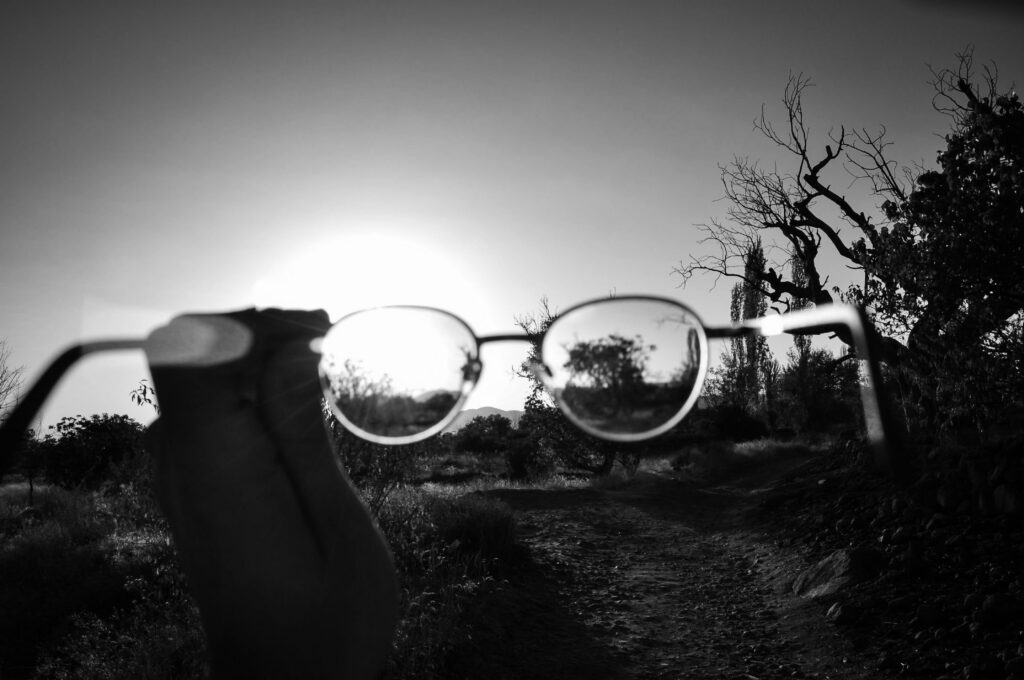
The lens you’ve been looking through
Imagine you’ve been wearing the same pair of glasses for years.
Over time, the lenses have become scratched and cloudy. They’re no longer as clear as they once were, but because you’ve been wearing them for so long, you don’t even realise they’re changing what you see.
Eventually, you stop questioning the glasses and start believing the picture of the world they’re showing you.
Our self-worth can work in a very similar way to this. If you’ve spent years believing that you’re not good enough, that belief slowly becomes the lens you see yourself through.
So when somebody compliments you, you brush it off because they were “just being nice.”
When you achieve something you’ve worked really hard for, you tell yourself anyone could have done it.
But if you make one small mistake, suddenly it feels like proof that you’ve never really been enough after all.
The problem isn’t that you aren’t enough, it’s that you’ve been looking at yourself through a lens that only seems to notice what’s missing, while overlooking everything that’s already there.
What if the problem was never you?
Living like this is exhausting.
It’s exhausting feeling like you always need to do more before you’ve earned the right to rest. It’s exhausting worrying about disappointing people, replaying conversations in your head or wondering whether you’re falling behind everyone else. And it’s exhausting chasing a feeling that never quite seems to arrive.
But if there’s one thing I’d love you to take away from reading this, it’s this:
Feeling like you’re never good enough doesn’t mean it’s true.
More often than not, it means you’ve spent a long time measuring yourself against impossible standards and looking at yourself through a lens that’s become scratched and clouded over the years. You know the beautiful thing about lenses, is that they can change.
This may not happen overnight and it won’t be one big thing that ‘fixes’ everything, it can happen once you begin to notice the scratched lens you’re looking through, you no longer have to believe everything it shows you.
So if you’ve recognised yourself in these words today, perhaps that’s enough for now. Not to fix yourself or have all the answers immediately.
Just to gently wonder whether the voice telling you you’re not enough has been mistaken all along.